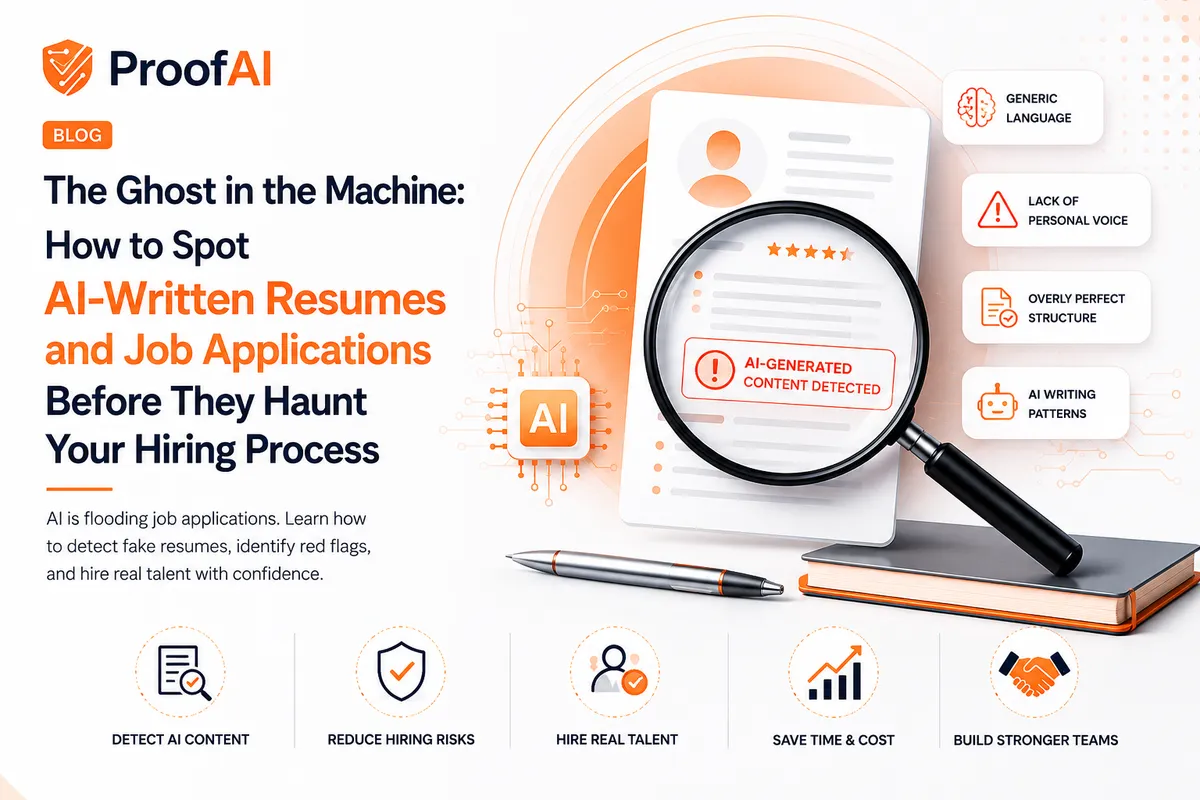
How to Detect AI-Written Resumes and Job Applications
A fair, practical guide for recruiters: what AI use in applications really signals, why detectors fall short on resumes, and how to verify skills.
Many candidates now use AI tools to draft or polish resumes and cover letters. For recruiters, the useful question is usually not "did AI touch this?" but "is what this document claims true, and can this person do the job?"
This guide explains what the research says about spotting AI-written applications, where detectors help and where they fail, and a hiring process that stays fair to candidates.
Try it: use ProofAI's CV AI detector, free for 10 checks a day with no login.
First, decide what you are actually screening for
Using AI to fix grammar or tighten a cover letter is not the same as inventing experience. Before you screen for AI, write down your policy:
- Acceptable: spelling and grammar help, formatting, rewording the candidate's own content.
- Worth a conversation: generic text that does not match the role, or a cover letter that says nothing specific.
- A real problem: false job titles, invented projects, fake qualifications or misrepresented skills.
The last group is what hurts hiring decisions, and it can be checked directly whether or not AI was involved.
Why "it sounds like AI" is a weak test
Recruiters often rely on instinct. Research suggests instinct is unreliable for this kind of text.
Want to check your own content? Try ProofAI free 10 checks a day, no login needed.
In six experiments with 4,600 participants, Jakesch, Hancock and Naaman (PNAS, 2023) found people could not detect AI-generated self-presentations, including in professional contexts. Participants treated first-person pronouns, contractions and family references as signs of a human writer. Those cues are easy for AI to produce, so the judgements were predictable and easy to manipulate.
Also read: How Teachers Can Detect ChatGPT in Assignments, Fairly
A second risk is fairness. A Stanford study by Liang et al. tested seven AI detectors on 91 TOEFL essays by Chinese students and found an average false-positive rate of 61.3% (Times Higher Education). The authors said non-native writers "bear more risks of false accusations". If your candidate pool includes people writing in a second language, a detector-led filter could reject qualified people unfairly.
Why detectors are especially weak on resumes
Resumes are short, formulaic and full of standard phrases such as "managed a team" or "improved efficiency". That is hard ground for any detector.
- Length. OpenAI said its own AI text classifier was "very unreliable" on texts below 1,000 characters, and withdrew it in July 2023 "due to its low rate of accuracy" (OpenAI). Many resume sections are shorter than that.
- Predictable text. OpenAI also noted that highly predictable text cannot be reliably classified. Resume bullet points are predictable by design.
- Easy evasion. OpenAI's guidance for educators notes that small edits can get past detectors (OpenAI Help Center).
A detector can still be useful on longer pieces, such as a cover letter or a written assessment answer. Use the result to decide what to ask about, not who to reject.
Practical signals worth checking
These are not proof of AI use. They are prompts for follow-up questions.
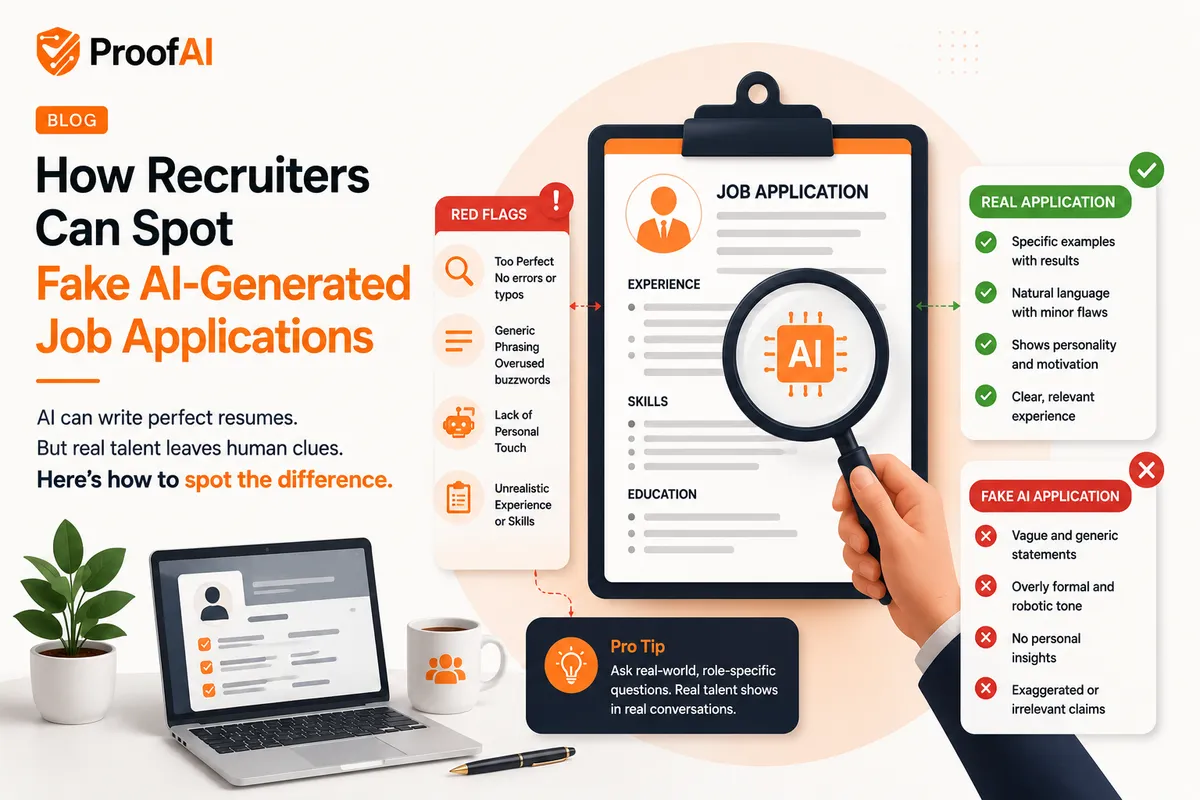
- Claims with no detail. "Led digital transformation" without a project, tool, team size or outcome. Ask for the specifics.
- A mismatch with the job ad. Skills listed that have nothing to do with your stack, or a cover letter that could be sent to any company.
- Inconsistency across documents. Dates, titles or responsibilities that differ between the resume, cover letter and professional profile.
- Errors you can verify. A company name, certification or product that does not exist, or a timeline that does not add up.
- Style shifts. A very polished cover letter next to rough screening answers is worth asking about, though many people simply get help with one document.
A screening process that holds up
- Verify the claims that matter. Check qualifications, previous employers and key projects through references and documents, the same way you would for any candidate.
- Use structured, behavioural interviews. Ask every candidate the same core questions and follow up on their own resume: "What was your part in this? What went wrong? What would you do differently?" People who did the work can usually answer in detail.
- Test the skill directly. Short, job-relevant work samples, done live or with a clear brief, show ability better than any document.
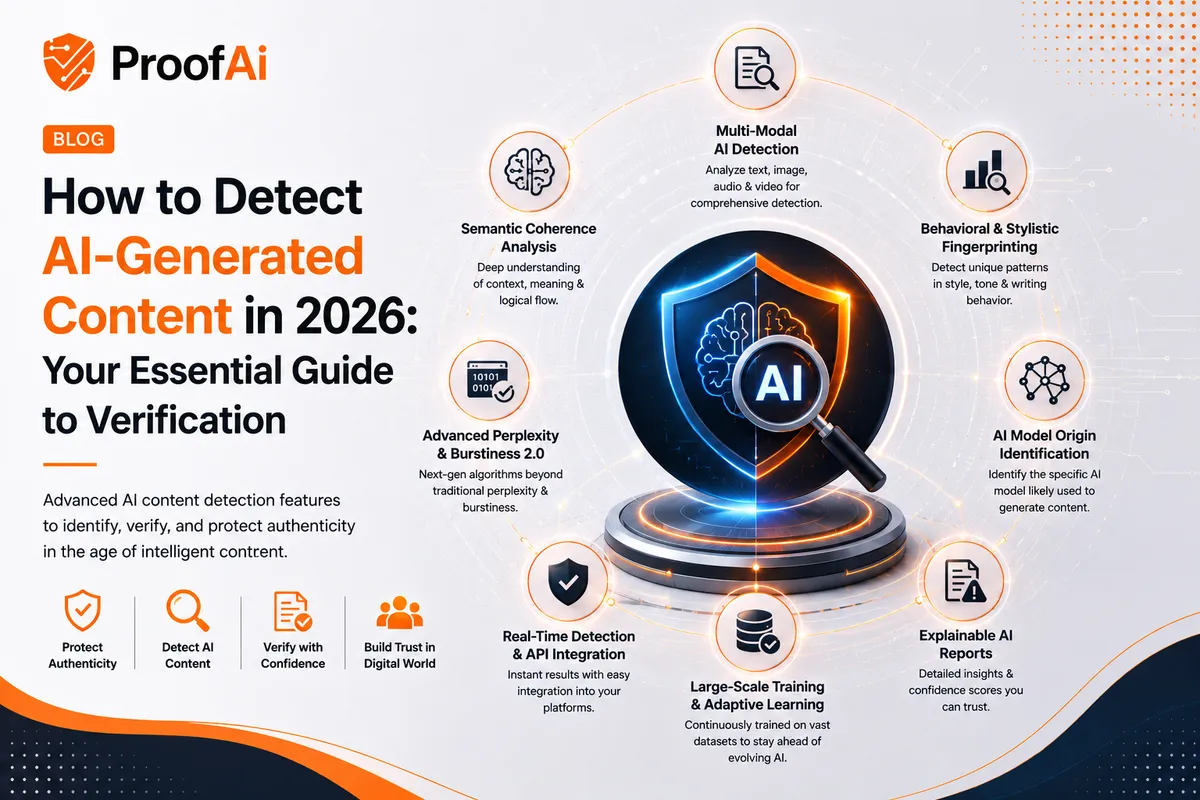
- Run a detector only as a secondary signal. Use longer text, look at which passages were flagged, and read them yourself.
- Never reject on a score alone. Record what you checked, and give the candidate a chance to explain before making a decision.
- Be transparent. Tell candidates in the job post what AI use you accept, and whether any screening tools are used.
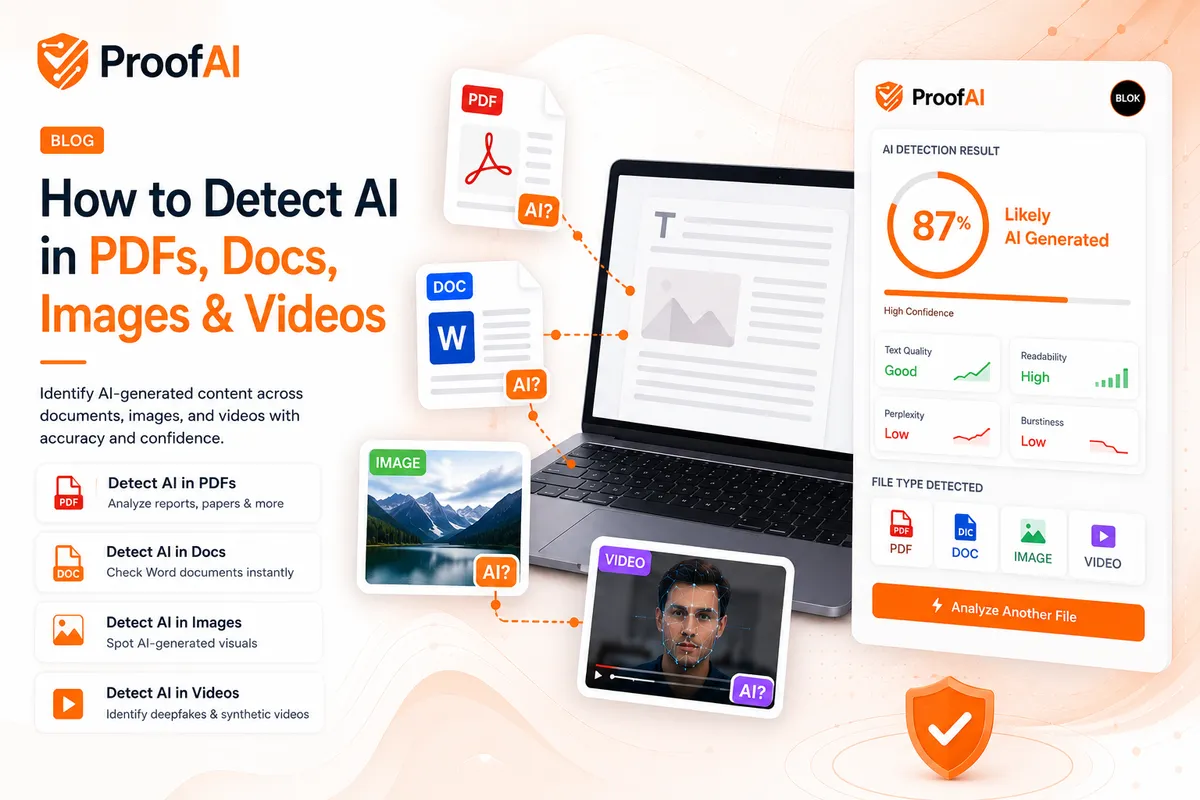
If you do use a detector for step 4, ProofAI's AI resume detector checks pasted text or PDF, DOCX, DOC and TXT files. Its results are probabilities, not proof, so they should start a conversation rather than end one. ProofAI sends the text or files you check to AI model providers to analyse them and keeps a record of each check (date, type and score, never your content); see our privacy policy.
The bottom line
You cannot reliably tell from wording alone whether AI helped write an application, and neither can current tools. What you can do is check whether the claims are true and whether the person can do the work. That protects your hiring decisions, and it is fair to candidates who used AI responsibly or who simply write in a formal style.
Sources
- Jakesch, M., Hancock, J. and Naaman, M. (2023). Human heuristics for AI-generated language are flawed. PNAS. https://arxiv.org/abs/2206.07271v4
- Times Higher Education (11 July 2023). AI text detectors 'biased against non-native English speakers'. https://www.timeshighereducation.com/node/727071
- OpenAI. New AI classifier for indicating AI-written text (updated July 2023). https://openai.com/index/new-ai-classifier-for-indicating-ai-written-text/
- OpenAI Help Center. How can educators respond to students presenting AI-generated content as their own? https://help.openai.com/en/articles/8313351-how-can-educators-respond-to-students-presenting-ai-generated-content-as-their-own
Written and reviewed by the 4Born Content Writer Team. AI tools assisted with drafting; every statistic above links to its source.
Published by
AI tools may assist with drafting; a team member checks and approves every article before it is published. How we write and correct articles.
Popular AI detection tools
Ready to Verify Your Content?
Get weekly insights on AI detection. Start your journey toward digital authenticity with our AI detection tools.